
Australian agriculture has shifted from manual effort to highly efficient mechanised systems, and McDougall Weldments sits within this shift as a long-standing Australian manufacturer of durable livestock equipment. The following rewrite integrates links to relevant McDougall Weldments pages and avoids your listed overused constructions and words.
Evolution of Agricultural Machinery in Australia
Picture the wide plains of the Australian outback where one farmer once worked every paddock with hand tools alone. Today, those same paddocks run on the strength of advanced machinery that turns dry country into productive farmland within days. The use of machinery in agriculture has become a central driver of modern efficiency in Australia’s demanding conditions.
In this article, we look closely at how modern equipment, from GPS-guided tractors to autonomous harvesters, has lifted Australian farming performance. Growers now reach higher yields while lowering labour costs and limiting environmental impact. You will see key technologies shaping this change, along with examples from Queensland sugarcane country and Western Australia’s broadacre regions.
By the end, you will understand how these innovations work in practice and what to keep in mind when planning upgrades on your own farm. Whether you run a mid-sized family enterprise or advise clients in agribusiness, you will have practical ideas to apply on the ground.

From Manual Labour to Mechanised Farming
The use of machinery in Australian agriculture has shifted from hand tools in the 19th century to the sophisticated, large-scale systems used today. Early settlers relied on axes, sickles, and draught animals to clear mallee scrub and harvest wheat, as recorded in South Australian farming archives. Breakthroughs such as John Ridley’s 1843 stripper harvester and the stump-jump plough of the 1870s opened up dry country that previously seemed too hard to work.
After the Second World War, tractors and air seeders began to replace repeated passes with lighter equipment, reducing tillage on many paddocks from numerous trips to very few. This shift has supported high-output farms that now handle tens of millions of tonnes of grain every year. Australian producers continue to build on that foundation with investment in more capable machinery and locally made equipment that suits regional conditions.
Adapting to Australia’s Varied Landscapes
Australian farmers operate across a wide mix of soils and climates, from dry mallee blocks to fertile coastal flats. Machinery design reflects that variety through features such as stump-jump ploughs, disc systems for scrub country, and precision sprayers for higher rainfall zones. GPS-guided harvesters and seeding rigs help growers match inputs to local moisture and soil variation, lifting output while reducing waste.
Advice from machinery distributors highlights the value of suitable grain handling gear for dry storage areas and compact equipment for mixed farms. Many broadacre growers now apply soil testing, reduced tillage, and high stubble retention to protect fragile soils and maintain productivity in tough years. This careful matching of equipment to landscape forms part of a broader move toward sustainable, long-term farming systems.
Cropping Productivity and the Role of Machinery
Cropping sectors in Australia have seen stronger productivity growth than livestock over recent decades, supported by farm consolidation and focused capital spending on machinery. New seeding systems, guidance technology, and larger harvesters help growers sow and harvest more hectares in tight weather windows. Together with better agronomy, this has contributed to rising total production, measured in tens of billions of dollars each year.
These gains depend on reliable machinery that can operate over large areas with minimal downtime. Australian-made gear plays a useful part by providing strong frames, practical layouts, and parts support tailored to local conditions. Many producers choose suppliers who understand regional issues such as dust, corrugations, and long travel distances between properties.
Reducing Labour Pressures
Mechanisation eases heavy physical work at a time when agriculture accounts for a small share of total employment and faces persistent labour shortages. Larger tractors, self-propelled sprayers, and higher-capacity harvesters allow one skilled operator to manage tasks that once needed a sizeable team. In many cases, workers now spend more time supervising systems and making decisions than performing manual jobs.
Livestock operations gain similar benefits from well-designed handling gear. Transportable sheep yards and purpose-built handling races support faster drafting, weighing, and loading with fewer staff on site. As farms grow in scale, these labour savings help maintain safe workloads and reduce fatigue, particularly during peak seasons such as shearing and lamb marking.
How Machinery Lifts Farm Productivity
Labour Reduction and Precise Operations
Modern agricultural machinery reduces labour demands while allowing precise control of operations across both cropping and livestock enterprises. Guidance systems, section control, and rate controllers limit overlap and over-application, trimming fuel and input use. As a result, farmers can manage more hectares with the same or smaller teams.
In sheep enterprises, mobile handling systems give producers the freedom to set up yards close to mobs rather than walking stock long distances. Efficient layouts support higher throughput per hour, so staff spend less time on repetitive tasks and more time on decisions that affect animal performance.
Productivity Gains in High-Volume Cropping
Automation and precision tools help farmers manage large crop volumes despite variable seasons. By placing seed and fertiliser more accurately, growers can lift yields while trimming wasted inputs. Extended operating hours with reliable machinery also reduce the risk of weather damage during harvest.
These improvements have supported record runs of winter crops in recent years, with millions of tonnes of grain moved through Australia’s supply chains. Consistent investment in machinery and technology remains a key factor in maintaining that performance.
Cost Savings and Scalable Operations
Many producers report lower fuel and input costs after moving to modern equipment and refined field paths. Variable rate technology allows them to reduce fertiliser and chemical use in areas that do not require full rates. In an environment where fertiliser, fuel, and labour costs continue to climb, these savings can make the difference between a tight result and a solid year.
As farmers gain confidence in their machinery and data systems, they often expand their area or add new enterprises. Scalable equipment supports that growth by handling larger workloads without major additional labour. Australian-made machinery gives owners extra confidence because it is designed around local expectations for toughness and service access.
Supporting National Food Security
Reliable farm machinery underpins Australia’s capacity to supply food and fibre to domestic and export markets. When equipment performs consistently, producers can plant and harvest at the right times, maintaining supply even in challenging seasons. Local manufacturers such as McDougall Weldments add resilience through onshore production and a focus on long service life.
Precision practices supported by suitable equipment also limit waste and protect natural resources. Farmers who adopt these approaches enjoy more stable yields while contributing to national food security and regional economic strength.
Australian Agricultural Machinery Market in 2026
Industry analysis values the Australian agricultural machinery market at several billion US dollars in 2026, reflecting steady growth since 2025. Tractors make up a large share of this figure, with strong demand for higher horsepower models capable of pulling wider implements over broadacre paddocks. Cropping sectors, supported by this machinery, continue to outpace livestock in productivity growth.
Forecasters expect the market to grow further by 2031, helped by spending on irrigation systems, guidance equipment, and automation. For Australian manufacturers such as McDougall Weldments, this outlook presents chances to supply durable components and complete systems that support farmers across the country.
Brand awareness data shows strong interest in well-known international tractor names, driven by long-established reputations for durability. Farmers with remote properties often base purchasing choices on proven reliability, support networks, and compatibility with existing implements.
Emerging Trends in Agricultural Machinery
Rise of Precision Technology
More farms now combine GPS guidance, data analytics, and aerial imaging to refine decisions on planting, fertiliser, and crop protection. GPS tractors help cut overlaps in seeding and spraying, while drones and satellite imagery highlight crop stress before it becomes visible from the ground. These tools support timely responses and more targeted use of inputs.
Some growers use open data platforms so that monitors, controllers, and software can work together without manual data entry. As adoption rises, the benefits compound through better paddock records, easier benchmarking, and more confident long-term planning.
Strong Focus on Sustainability
Pressure on input costs and natural resources has pushed many farmers toward sustainable practices that maintain soil health and reduce emissions. No-till or minimum-till systems, supported by suitable machinery, reduce erosion and improve soil structure over time. Site-specific application of fertiliser and chemicals limits run-off and supports more efficient nutrient use.
In Australia, some producers also trial electric or hybrid drivetrains and explore carbon projects tied to changes in land management. Reliable equipment that integrates with sensors and digital platforms makes these programs easier to run at scale.
Mechanisation to Address Labour Shortages
Global markets for agricultural robotics and automation continue to grow as producers respond to labour constraints. In Australia, robot-ready machinery, autonomous functions, and remote monitoring tools help farmers run more land with fewer people on site at any given time.
Sheep producers, in particular, benefit from mobile yards and mechanised handling aids that reduce heavy lifting and awkward manual work. These systems support healthier staff and allow older farmers to remain active in their businesses longer.
Advances in Safety Technology
Newer machinery often includes improved guarding, rollover protection, and better operator visibility to lower injury risk. Additional technologies such as proximity sensors, automatic braking systems, and telematics alerts further reduce common hazards. Rural connectivity improvements also support real-time communication and incident response.
Decision tools that rate the effectiveness of specific safety upgrades help owners choose options with the greatest impact. By combining training, safe work procedures, and sound machinery design, farms can lower injury rates while maintaining productivity.
Machinery in Livestock: Focus on Sheep Management
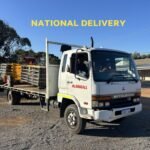
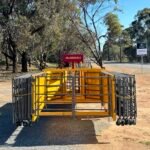
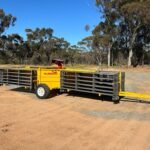
In sheep enterprises, transportable yards have become an important tool for efficient stock handling over large paddocks. Modular systems can handle hundreds or thousands of sheep per unit and are designed for quick setup and pack-down. Trailer-mounted layouts with galvanised steel panels, wheels, and winches allow farmers to shift the yards between blocks to perform jobs such as tailing, crutching, jetting, and drafting where the sheep are located.
This mobility reduces mustering time and animal stress, which improves welfare outcomes and supports better growth and wool quality. For medium-scale farms, throughput rates of several hundred sheep per hour are achievable, providing a practical response to labour shortages and growing flock sizes.
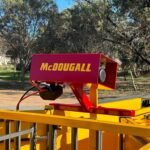
McDougall Weldments’ SERIES-X transportable sheep yards illustrate how Australian-made equipment caters to local needs. The 300 SERIES-X focuses on smaller mobs, the 500 SERIES-X suits moderate flock sizes, and the 1000 SERIES-X supports larger operations, with each configuration offering specific race lengths and drafting options. Manufactured in Western Australia since 1968, these yards use heavy-duty local materials and proven layouts that promote smooth stock flow and reduce balking.
Productivity Gains in Stock Management
Improved livestock handling equipment supports gains in weight, carcase quality, and wool production, even though overall livestock productivity has grown more slowly than cropping. On-paddock handling enables more frequent and less stressful weighing, drafting, and health treatments. With the right gear, producers can time interventions to maximise returns instead of waiting for infrequent yard visits.
Transportable sheep yards from McDougall Weldments help farmers manage increasing lamb numbers and larger mobs efficiently. Well-planned races and drafting sections reduce bottlenecks, which improves worker safety and lowers the risk of animal injury.
Connecting SERIES-X to Wider Mechanisation
The SERIES-X range integrates well with electronic identification readers, auto-drafters, and other handling units that form part of modern livestock systems. Owners can combine these yards with mobile feeders, weighing platforms, and digital monitoring tools to build flexible, scalable setups.
This modular approach aligns with broader trends toward automation and data-driven decisions, helping sheep enterprises lift profitability while supporting animal welfare and staff safety. When choosing a configuration, producers can match panel counts and race layouts to flock size, terrain, and planned future expansion.
To explore SERIES-X options in more detail, visit the McDougall Weldments transportable sheep yards page.
Safety Challenges and Practical Mitigation
Powered equipment remains a major contributor to farm fatalities in Australia, especially in relation to tractors, quad bikes, and side-by-side vehicles. Common incidents involve rollovers, run-overs, entanglement with rotating parts, and crush injuries around attachments. National reports indicate that machinery is involved in a large share of agricultural deaths, making safety a serious priority for every farm.
Recommended Safety Technologies
Evidence-based ranking tools assess the benefits of retrofitted and factory-installed safety technologies such as rollover protection, seatbelts, proximity sensors, and automatic braking. Farmers can use these ratings to focus investment on upgrades that most effectively reduce run-over and rollover risk.
Combined with clear traffic plans, exclusion zones, and secure guarding around power take-off shafts, these technologies support safer day-to-day operation of tractors and implements. Good lighting, maintenance routines, and consistent lockout procedures further lower the chance of serious incidents.
Training and Australian-Made Equipment
Training and regular pre-start checks remain vital elements of farm safety. Workers benefit from structured inductions, refreshers, and practical demonstrations that build confidence in operating machinery correctly. Applying the hierarchy of controls in full, starting with engineering solutions and safe design, provides a stronger foundation than relying on administrative rules alone.
Choosing durable Australian-made equipment designed for local conditions helps reduce failures in rugged terrain, dusty environments, and remote locations. McDougall Weldments builds robust structures and handling gear that stand up to repeated use, which supports consistent safe operation in real-world conditions.
These approaches work together to reduce downtime, protect staff, and keep farms on track to meet both productivity and safety goals.
Actionable Steps for Australian Farmers
Australian farmers can benefit from a clear plan for machinery investment that balances productivity, safety, and long-term resilience. Start by reviewing current plant, identifying bottlenecks in seeding, spraying, harvest, or livestock handling, and prioritising upgrades with the strongest payback. Guidance systems, precision application tools, and well-designed stock yards often sit near the top of this list.
Local manufacturing offers advantages in reliability, service, and support. McDougall Weldments provides transportable sheep yards and agricultural products built in Western Australia for Australian conditions, with designs that handle 300 to 2,000 sheep depending on configuration. You can learn more about these products and request information through the agricultural products page on the McDougall Weldments website.
As many farmers expect stable or improving business conditions, this period presents a good chance to assess return on investment for machinery upgrades. Incorporating IoT sensors, automation, and strong safety features into new purchases helps prepare operations for labour constraints, climate challenges, and tighter margins.
Conclusion
Machinery has reshaped Australian agriculture by turning vast, demanding country into highly productive farming land. Growers have increased output per hectare, reduced labour intensity, and adopted practices that limit environmental impact, often supported by precise, data-guided equipment. Regional examples from sugarcane districts and broadacre grain regions illustrate the scale of these gains.
This ongoing evolution not only lifts yields today but also strengthens farms against climate volatility and market pressures. Producers who invest in fit-for-purpose machinery, apply available incentives, and work with experienced suppliers can build tailored solutions for their businesses.
Farmers ready to act can explore McDougall Weldments’ range of agricultural products and SERIES-X transportable sheep yards to support livestock and mixed-farming operations. Visit:
-
McDougall Weldments home: https://www.mcdougallweldments.com.au
-
Transportable sheep yards: https://www.mcdougallweldments.com.au/sheepyards
-
Agricultural products overview: https://www.mcdougallweldments.com.au/agricultural-products-mcdougall-weldments
4 Replies to “Unlocking Efficiency: Machinery in Australian Agriculture”